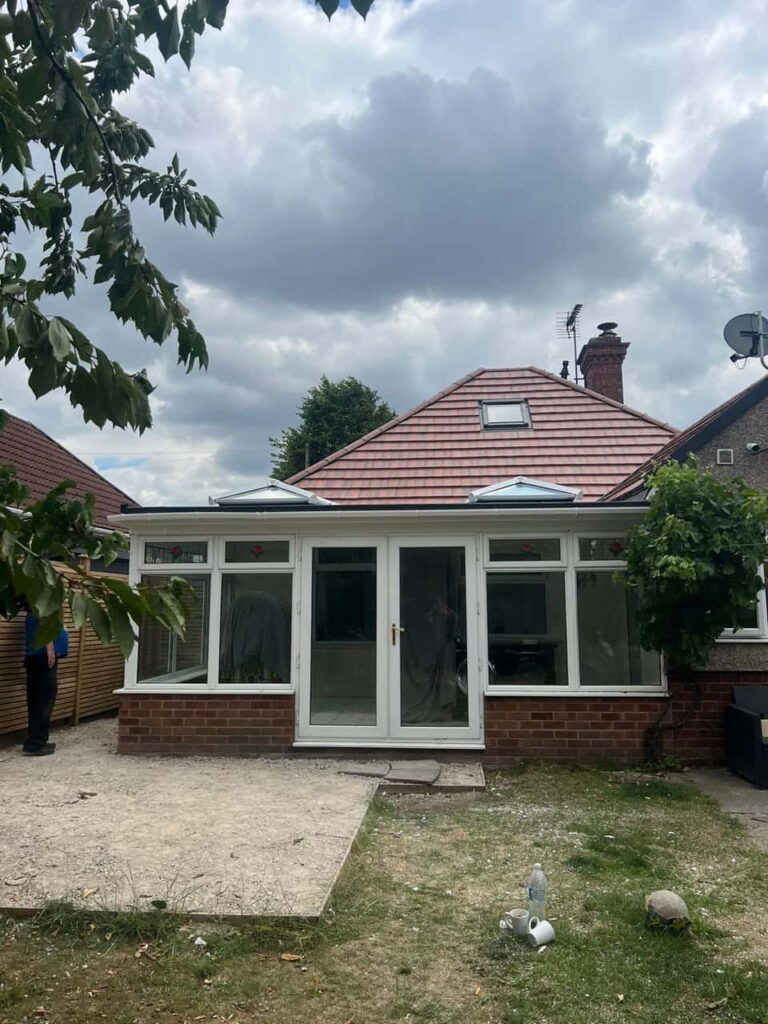
A leaking roof does not always create an immediate or obvious problem inside a property. Water can enter through a relatively small defect, travel beneath the roof covering and affect concealed materials before a visible stain appears on a ceiling or wall. By the time damp becomes noticeable indoors, moisture may already have reached insulation, timber or other parts of the roof structure.
For property owners in Chinnor, Oxfordshire, prompt roof leak repairs can help prevent this hidden damage from becoming more extensive. The key is to identify the actual point of water entry and correct the roofing defect rather than simply treating the internal symptom.
A professional roof inspection can determine whether the leak is caused by a slipped tile, cracked slate, damaged flashing, worn roof detail or another localised issue. Once the source has been established, an appropriate repair can help restore the weather protection of the roof and reduce the risk of further moisture entering.
Why Is Early Roof Leak Repair Important?
Roof leaks can spread because water does not always remain directly beneath the original defect.
Early professional attention can help by:
- Identifying the true point of water entry
- Repairing damaged or displaced roofing materials
- Checking surrounding tiles, slates and roof details
- Reducing further moisture penetration
- Protecting materials beneath the roof covering
- Preventing repeated wetting of the same area
- Distinguishing an isolated leak from wider deterioration
- Addressing the cause rather than only the visible damp mark
The sooner the route of water ingress is understood, the easier it is to prevent the affected area from continuing to expand.
A Small Roof Defect Can Cause a Larger Internal Problem
A roof does not need to contain a large opening for water to enter.
A slightly slipped tile, small crack or weakened roof junction can allow rainwater beneath the covering.
Once inside, water may move along different materials before becoming visible.
This means the external defect can be relatively small while the internal signs appear much more widespread.
Water Can Travel Away From the Original Leak
One of the main difficulties with roof leaks is that the position of an internal stain does not necessarily identify the point where water entered.
Moisture can travel along rafters, battens or other roofing components.
It may then collect at a lower point before reaching a ceiling.
For this reason, repairing only the section directly above a damp patch may fail to resolve the true cause.
Ceiling Stains Are Often Only the Visible Symptom
A brown mark or damp patch on a ceiling is usually evidence that water has already travelled through part of the roof construction.
The visible stain is therefore the result of the problem rather than necessarily the location of the problem.
Professional leak investigation starts by considering where moisture could be entering externally.
This helps avoid repeatedly treating the wrong area.
Leaks Can Develop Gradually
Not every roof leak produces dripping water.
Some allow relatively small amounts of moisture to enter during heavy rainfall or particular wind directions.
This can create intermittent dampness rather than an obvious continuous leak.
Because the problem appears minor, it may be overlooked.
Over time, however, repeated wetting can allow the affected area to spread.
Heavy Rain Can Expose Existing Weaknesses
A roof may appear to perform adequately during ordinary weather but begin leaking during prolonged or wind-driven rain.
This can happen where an existing weakness is only exposed under more demanding conditions.
The fact that leaking stops afterwards does not mean the defect has disappeared.
The roof can remain vulnerable until the cause is repaired.
Slipped Tiles Can Allow Water Beneath the Covering
Roof tiles are installed to overlap and direct water down the roof.
If one becomes displaced, part of the protected area beneath can become exposed.
Even slight movement can affect how rainwater is shed.
A slipped tile does not automatically mean the complete roof is deteriorating.
Where surrounding materials remain sound, localised repair may be appropriate.
Missing Tiles Should Be Addressed Promptly
A missing tile creates a more obvious opening in the roof covering.
The materials beneath may provide some secondary protection, but they are not intended to act as the main weatherproof layer indefinitely.
Leaving the area exposed can increase the opportunity for water to enter during subsequent rainfall.
Replacing the missing tile and checking surrounding materials can help restore protection.
Cracked Tiles Can Be Less Obvious
A tile can remain in position while containing a crack.
From ground level, the roof may therefore appear complete.
Depending on the extent and position of the damage, water may still find a route beneath the covering.
Professional inspection can identify whether the affected tile requires replacement and whether neighbouring units remain secure.
Slate Movement Can Create Similar Problems
Slate roofs can also develop localised leaks where individual slates slip, crack or become displaced.
A single affected slate may remain suitable for targeted repair.
If several slates are moving across unrelated areas, however, the wider condition should be considered.
The pattern of movement can help determine whether the problem is isolated or more widespread.
Damaged Flashing Can Allow Hidden Water Ingress
Flashing protects vulnerable roof junctions.
Where it becomes damaged, lifted or deteriorated, water can enter despite the main roof covering appearing intact.
Because these areas are often close to walls, chimneys or other roof features, internal damp can sometimes appear some distance from the actual defect.
Professional assessment can help establish whether flashing is responsible.
Chimney Areas Need Careful Diagnosis
Leaks around chimneys can be difficult to trace because several components meet within a relatively small area.
The surrounding tiles or slates, flashing and roof junctions may all need to be considered.
A damp patch near a chimney does not automatically prove that one particular detail has failed.
Water movement can make the source less obvious.
Ridge and Hip Areas Can Also Allow Water Entry
Ridge and hip sections are exposed parts of the roof.
If materials in these areas become loose or deteriorated, water may enter during periods of demanding weather.
The visible problem may remain small while moisture travels further beneath the covering.
Checking surrounding sections helps establish whether the defect is genuinely localised.
Flat Roof Leaks Can Be Difficult to Locate
Flat roof water ingress can be particularly misleading.
Water may travel across or within the roof construction before appearing internally.
The visible damp area may therefore not sit directly beneath the external defect.
A professional inspection should consider the surface, edges, junctions and roof details rather than simply treating the area above the internal stain.
Patching the Obvious Area May Not Solve the Leak
Applying a local patch without understanding the route of water entry can provide only temporary improvement.
If the actual defect remains elsewhere, the leak may return during the next period of rainfall.
This is why diagnosis is such an important part of professional roof repair.
The repair should address the cause rather than simply the most visible symptom.
Repeated Leaks in the Same Area Need Investigation
If a roof repeatedly leaks in the same internal location, it may indicate that the original source has not yet been identified.
It does not automatically mean the entire roof needs replacement.
Water may be entering from a nearby junction, damaged tile or other overlooked detail.
A more thorough inspection can help determine why the problem continues.
Leaks in Different Areas Can Suggest Wider Deterioration
A different pattern occurs when leaks begin appearing in several unrelated locations.
One section may be repaired successfully, followed by another part of the roof developing a new problem.
If this continues, the roof may be experiencing broader deterioration.
At that stage, the condition of the complete covering should be assessed rather than treating each leak in isolation.
Hidden Moisture Can Affect Insulation
Water entering the roof can sometimes reach insulation before becoming visible in the room below.
Damp insulation may not perform in the same way as dry material.
The important roofing priority is to stop further water entry.
Professional roof repair cannot reverse every effect of existing moisture, but it can prevent the same defect from continuing to introduce more water.
Roof Timbers Can Be Exposed to Repeated Moisture
Where leaks are left unresolved, timber components may be exposed to repeated wetting.
One brief leak does not automatically mean serious timber deterioration has occurred.
However, allowing water ingress to continue increases the opportunity for hidden materials to remain damp.
Repairing the external defect helps stop the source of the problem.
Repeated Wetting Can Increase the Affected Area
A leak may initially affect only a small section.
If rainfall continues entering through the same opening, moisture can gradually spread across a larger area.
This can make the eventual internal signs appear more significant.
Prompt repair limits the opportunity for the problem to expand in this way.
Damp Marks Can Grow Between Periods of Rain
Homeowners sometimes notice that a ceiling mark appears slightly larger after each period of wet weather.
This can suggest that moisture is continuing to enter.
The absence of active dripping does not mean the roof is dry.
A professional inspection can help identify the source before the affected area grows further.
Mould or Musty Odours Can Indicate Ongoing Dampness
Where moisture remains hidden for a period, a musty smell or localised mould can sometimes develop internally.
These signs do not identify the roof defect by themselves.
They can, however, indicate that moisture has been present for longer than the visible stain suggests.
The external cause should still be investigated and repaired.
Internal Decoration Can Be Affected Before the Leak Looks Serious
Paintwork and ceiling finishes can sometimes show staining, bubbling or discolouration when moisture reaches them.
These visual changes may appear before an obvious drip develops.
Treating the internal finish without repairing the roof can allow the staining to return.
The external source needs to be resolved first.
Roof Repairs Help Stop Further Ingress
The primary purpose of a roof leak repair is to stop more water entering through the defective area.
Once the route has been identified, damaged materials can be repaired or replaced as appropriate.
This restores the function of the affected section.
Preventing further ingress is what limits the opportunity for concealed damage to continue spreading.
Surrounding Materials Should Be Checked Too
An obvious broken tile may not be the only part affected.
Neighbouring materials can sometimes have moved or deteriorated at the same time.
Checking the surrounding section helps make sure the repair is complete.
This is particularly useful following strong winds or where several adjacent components show wear.
Repairing the Cause Is More Effective Than Repeated Internal Treatment
Painting over a stain, drying the ceiling or placing a container beneath a drip does not address the roofing defect.
These measures may manage the immediate internal symptom.
They do not stop further rain from entering.
Effective roof leak repair focuses on the external cause.
A Leak Does Not Automatically Mean You Need a New Roof
One isolated roof leak can often be repaired.
A cracked tile, damaged flashing section or slipped slate may be responsible while the rest of the roof remains serviceable.
Replacement should not be assumed simply because water has entered once.
The condition and distribution of defects are more important.
Roof Age Alone Should Not Determine the Decision
An older roof may develop a localised leak and still remain suitable for repair.
Likewise, a relatively newer roof can experience a defect.
Age provides useful context, but the actual condition of the covering matters more.
The repair approach should reflect what is found during inspection.
Several Problems Across the Roof Need Broader Assessment
If leaks occur alongside widespread tile movement, deteriorated roof details or repeated repairs, the situation may no longer be purely localised.
Professional assessment can determine whether individual repairs remain sensible.
The important point is to consider the roof as a complete system when defects become widespread.
Previous Repairs Are Not Automatically a Concern
A roof can contain previous repairs and still remain perfectly serviceable.
The key issue is whether those repairs remain sound and whether new defects are developing elsewhere.
A history of maintenance alone does not prove that the roof is failing.
The current pattern of deterioration provides more useful information.
New Leaks Around Previous Repairs Need Context
If water appears close to an older repair, the original work should not automatically be assumed to have failed.
The leak may originate from neighbouring materials or another roof detail.
Water movement can make internal symptoms misleading.
Inspection should therefore consider the complete surrounding area.
Storms Can Reveal Weaknesses That Were Already Developing
Strong winds and heavy rain can expose roofing materials that were already loose or deteriorating.
The storm may make the defect noticeable rather than being the sole cause.
If a leak begins after demanding weather, the surrounding roof condition should be assessed.
This can help identify whether the problem is truly isolated.
Early Repairs Can Keep Work More Focused
A small defect is often easier to address while the surrounding roof remains unaffected.
If water is allowed to enter repeatedly, the investigation may involve a larger area.
Prompt attention can therefore help keep the scope of work proportionate.
This does not mean every minor mark requires extensive roofing work, but persistent or new signs of water ingress should not be ignored.
Temporary Dry Weather Can Hide the Problem
A roof may only leak during particular weather conditions.
Once the rain stops, the ceiling may dry and the problem can appear to have resolved.
The opening in the roof, however, may still remain.
Future rainfall can allow water to enter again.
Wind Direction Can Influence When a Leak Appears
Some defects only allow water through when rain is driven towards a particular roof junction.
This can make the problem appear inconsistent.
A roof may remain dry through several showers and then leak during one period of strong wind and rain.
This behaviour can provide useful clues during diagnosis.
Small Defects Can Be Difficult to See From Ground Level
A displaced tile or lifted section of flashing may not be obvious from below.
The roof can therefore appear intact despite allowing moisture in.
Where internal damp has developed, professional inspection may be necessary even if no external damage is immediately visible.
Homeowners Should Avoid Accessing the Roof Themselves
Trying to trace a leak by climbing onto the roof can create unnecessary risk and may damage roofing materials.
Tiles and slates are not designed for casual foot traffic.
Professional roofers can assess the relevant areas using appropriate methods.
Ground-level observations and internal signs are safer ways for homeowners to identify that professional attention may be needed.
Check Internal Areas After Heavy Rain
Homeowners can monitor accessible upper rooms and ceilings following periods of heavy rainfall.
New stains, dampness or changes in existing marks can indicate ongoing ingress.
These observations can help provide useful information about when the leak occurs.
They should be passed on during professional assessment.
Roof Spaces Can Sometimes Provide Useful Clues
Where a roof space can be accessed safely from inside the property, signs of dampness may help identify the general area affected.
However, visible moisture still does not necessarily reveal the exact external point of entry.
Water can travel within the roof before reaching the location where it becomes noticeable.
Professional external assessment remains important.
The Underlay Is Secondary Protection
The layer beneath tiles or slates can provide additional protection if a small amount of water gets past the outer covering.
It should not be relied upon indefinitely as the primary defence against rainfall.
If roof tiles or slates are damaged or displaced, the outer covering should be restored.
This reduces unnecessary exposure of the materials beneath.
Hidden Damage Can Continue Even When the Ceiling Looks Dry
A ceiling can dry between periods of rain while materials above it remain affected.
The visible appearance of the room therefore does not provide a complete picture.
Stopping the external leak is essential because otherwise the cycle can repeat whenever weather conditions allow.
Professional Leak Detection Looks at the Whole Area
A good roof inspection does not focus exclusively on one tile directly above the damp mark.
The surrounding slope, roof junctions and relevant details should be considered.
This broader approach increases the likelihood of identifying the actual entry point.
It can also reveal whether more than one defect is contributing to the problem.
The Pattern of Water Ingress Helps With Diagnosis
Information about when the leak occurs can be useful.
For example, a leak that appears only during wind-driven rain may point towards a different type of vulnerability from one that appears during ordinary prolonged rainfall.
Professional assessment combines these observations with the external condition.
This can make repairs more targeted.
Repair Scope Should Match the Actual Defect
A localised problem should normally receive a localised repair where the surrounding roof remains sound.
Likewise, widespread deterioration should not be treated as though only one isolated tile is affected.
Professional inspection helps establish the correct scale of work.
This avoids both unnecessary replacement and repeated under-repair.
Some Roof Leaks Can Be Straightforward to Repair
Where the defect is clearly defined, the solution may be relatively focused.
Examples can include replacing a damaged tile, securing a slipped slate or repairing a specific flashing detail.
The important factor is confirming that the surrounding roof remains in serviceable condition.
Other Leaks Require More Investigation
When there is no obvious missing or damaged material, tracing the source can take more careful assessment.
Roof junctions, flashing and overlapping materials may all need to be considered.
This is particularly relevant where water travels before becoming visible indoors.
Accurate diagnosis prevents repairs from becoming guesswork.
Repeated Patching Is Not Always the Best Approach
If the same leak repeatedly returns after local treatment, applying another patch to the visible area may not provide a lasting solution.
The route of water entry should be reconsidered.
There may be an overlooked defect nearby or more widespread deterioration within that section.
A fresh assessment can help identify why the problem persists.
Several Unrelated Leaks Can Change the Repair Strategy
A property with one localised leak may only need one repair.
A property developing several separate leaks across different roof areas may require a broader review.
The distribution of defects matters.
When problems are widespread, treating them as unrelated incidents can overlook the declining condition of the roof as a whole.
Professional Assessment Can Prevent Unnecessary Replacement
A ceiling stain can make the situation appear more serious than the external defect actually is.
Professional inspection may reveal that one slipped tile or local flashing problem is responsible.
Where the surrounding roof remains sound, a targeted repair can restore protection without unnecessary wider work.
Professional Assessment Can Also Reveal Hidden Wider Problems
The opposite can occur as well.
One small internal stain may be the first visible sign of several external weaknesses.
Checking the wider roof helps identify whether additional defects are present.
This gives homeowners a clearer understanding of the actual condition rather than relying only on what can be seen inside.
Routine Roof Maintenance Can Help Identify Developing Issues
Occasional professional assessment can help identify damaged or displaced materials before they create noticeable leaks.
The objective is not to carry out unnecessary work.
It is to identify genuine defects while they remain manageable.
This can be particularly useful on roofs that have previously experienced localised problems.
Roof Leak Repairs in Chinnor, Oxfordshire
For property owners in Chinnor, Oxfordshire, roof leaks should be investigated at their source rather than judged only by the size or position of the internal damp mark.
At LS Roofing Chinnor, we can assess the roof covering, tiles or slates, flashing, junctions and other relevant details to identify where water is entering and determine the appropriate repair.
Where the defect is localised and the surrounding roof remains serviceable, repairs can remain focused on the affected area. Where several unrelated problems are present, the wider roof condition can be considered before deciding on the most suitable approach.
The aim is to stop further water ingress and address the roofing defect without recommending unnecessary work.
Conclusion
Roof leak repairs can stop hidden damage from spreading by identifying and correcting the point where water is entering the roof.
Even a relatively small defect can allow moisture to travel beneath the covering before becoming visible inside the property. Slipped tiles, cracked slates, damaged flashing and weakened roof junctions can all create routes for water ingress.
The visible ceiling stain is not always directly beneath the external defect, which is why accurate diagnosis matters. Treating the internal symptom alone will not prevent further rainfall from entering.
A single leak does not automatically mean the roof requires replacement. Where the problem is localised and the surrounding covering remains sound, targeted professional repairs can often restore protection effectively.
If you have noticed a roof leak, damp patch or recurring water mark at your property in Chinnor, Oxfordshire, contact LS Roofing Chinnor. We can assess the source of the problem and recommend an appropriate roof leak repair based on the actual condition of the affected area.
Call us on: 01844 396 693
Click here to find out more about LS Roofing Chinnor
Click here to complete our contact form and see how we can help with your roofing needs.