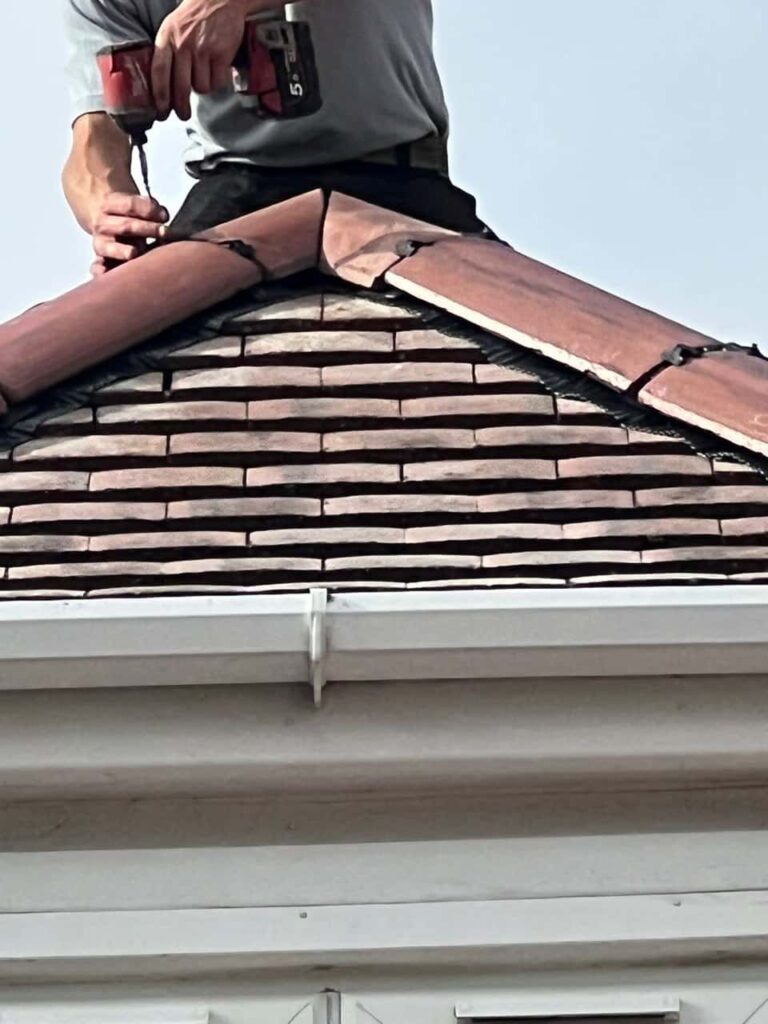
Roof repairs are a normal part of maintaining a property. Replacing an occasional broken tile, repairing flashing or dealing with an isolated leak can help a sound roof continue performing reliably for many years. However, when a roof contains numerous areas that have already been repaired, homeowners may reasonably begin to question whether continuing with individual repairs remains the best approach.
For property owners in Chinnor, Oxfordshire, multiple previous repairs do not automatically mean that a roof requires replacement. What matters is why those repairs were needed, the condition of the remaining roofing materials and whether new defects are continuing to develop.
Multiple Repairs Can Tell You Something About the Roof
A roof containing several repaired sections effectively has a maintenance history written across it. Each repair may have been entirely appropriate at the time, but together they can provide useful information about how the wider roof is ageing.
The important questions include:
- Are new defects appearing regularly?
- Are repairs occurring in different parts of the roof?
- Are the original materials becoming increasingly fragile?
- Have leaks returned after previous work?
- Is deterioration becoming widespread rather than localised?
If problems are becoming more frequent, assessing the roof as a complete system becomes increasingly important.
When Previous Repairs Are Not a Concern
A roof can have several historic repairs and still remain perfectly serviceable.
For example, individual tiles may have been replaced following isolated damage, while flashing or ridge details may have received maintenance at different stages. If the surrounding roof remains sound and no pattern of widespread deterioration is present, further targeted repairs may continue to be appropriate.
The number of repairs alone should therefore never determine whether replacement is necessary.
Frequent New Repairs Are More Significant
The situation changes when roofing problems begin appearing repeatedly.
If one section is repaired only for another defect to emerge shortly afterwards, the issue may no longer be confined to individual weak points. Instead, several roofing components could be reaching a similar stage of deterioration.
This commonly occurs on ageing roofs because materials installed at approximately the same time have also experienced similar levels of weather exposure.
Look at the Condition Between the Repairs
Focusing only on previously repaired sections can be misleading. The condition of the original roof between those repairs is often more important.
A professional assessment should consider whether the remaining materials are:
- Secure
- Structurally suitable
- Properly aligned
- Providing effective weather protection
- Showing widespread signs of deterioration
If large areas of the original covering remain in good condition, replacement may be unnecessary. If deterioration extends across much of the roof, a different approach may be more appropriate.
Recurring Leaks Deserve Closer Investigation
Repeated water ingress is one of the clearest reasons to reassess an extensively repaired roof.
A leak appearing in one location may have a straightforward cause. Several leaks developing in different areas can indicate broader weaknesses involving tiles, underlay, flashing or roof junctions.
It is also important to remember that the place where water becomes visible inside a property is not necessarily where it entered the roof. Moisture can travel beneath roofing materials before appearing internally.
A thorough inspection is therefore essential when leaks continue returning.
What Is Happening Beneath the Roof Covering?
Tiles and slates are only the visible part of the roofing system. Beneath them are components that contribute to the roof’s overall performance.
Repeated defects may sometimes indicate deterioration involving:
- Roofing underlay
- Battens
- Fixings
- Supporting materials
- Detailed junctions
Where underlying components have become extensively deteriorated, continuing to repair only the visible surface may not resolve the wider problem.
Roof replacement provides an opportunity to expose these areas and address unsuitable materials before installing the new covering.
Different Ages of Roofing Materials Can Create Inconsistency
A roof that has undergone numerous repairs may eventually contain a mixture of original and replacement materials.
This is not automatically problematic, but it can mean different sections are at very different stages of their serviceable lives. Older materials may continue deteriorating while newer repaired areas remain sound.
Eventually, maintaining a patchwork of differently aged components can become less practical than addressing widespread deterioration comprehensively.
Previous Repairs May Have Extended the Roof’s Life Successfully
Multiple repairs should not necessarily be viewed as evidence that earlier work has failed.
In many cases, timely professional repairs have done exactly what they were intended to do: resolve individual defects and extend the useful life of the existing roof.
The question is whether the roof has now reached a stage where that repair-led approach continues to make sense.
A roof that has performed for many additional years following maintenance may simply have reached the point where broader renewal deserves consideration.
When Roof Replacement May Be Appropriate
Replacement becomes more relevant when several indicators appear together rather than because of one isolated issue.
These can include:
- Widespread deterioration of the roof covering
- Increasingly frequent repairs
- Recurring leaks in different locations
- Significant deterioration beneath the covering
- Numerous ageing roofing components
- General loss of dependable weather protection
At this stage, replacing the roofing system can address the condition of the roof comprehensively instead of continuing to respond to individual defects.
When Another Repair May Still Be the Right Choice
If previous repairs remain sound and a new problem is genuinely localised, another targeted repair may still be entirely suitable.
For example, isolated damage to a small number of tiles does not justify replacing an otherwise dependable roof.
Professional roofing advice should therefore be based on the actual condition of the roof rather than automatically recommending the most extensive work.
Why a Whole-Roof Assessment Matters
When a roof has already received considerable repair work, inspecting only the latest defect does not provide enough information.
A broader assessment should consider:
- The age and condition of the covering
- Previous repair areas
- Current leaks or defects
- Ridge and verge details
- Flashing and junctions
- Visible underlying materials
- The overall consistency of the roofing system
This helps determine whether the latest problem is genuinely isolated or part of a wider pattern of deterioration.
Professional Roofing Support in Chinnor
At LS Roofing Chinnor, we provide professional roofing services throughout Chinnor, Oxfordshire. Where a roof has undergone multiple previous repairs, we can assess its wider condition rather than concentrating solely on the latest visible problem.
If targeted repair remains appropriate, addressing the specific defect can help preserve the existing roof. Where deterioration has become widespread, replacement may provide a more comprehensive and dependable solution.
The objective is to recommend work based on what the roof genuinely requires.
Conclusion
A roof with multiple previous repair areas does not automatically need replacing. Well-executed repairs can successfully extend the life of a roofing system, and an otherwise sound roof may continue to benefit from localised maintenance.
However, when repairs become increasingly frequent, leaks recur in different areas or deterioration is widespread across both visible and underlying materials, it may be time to consider the roof as a complete system rather than a collection of individual defects.
For homeowners in Chinnor, Oxfordshire, LS Roofing Chinnor can assess an extensively repaired roof and determine whether further targeted work remains suitable or whether replacement should now be considered. A professional whole-roof assessment provides the clearest basis for making the right long-term decision for your property.
Call us on: 01844 396 693
Click here to find out more about LS Roofing Chinnor
Click here to complete our contact form and see how we can help with your roofing needs.